
Map

Joints may be surgically approached and examined in one of two ways - arthrotomy and arthroscopy.
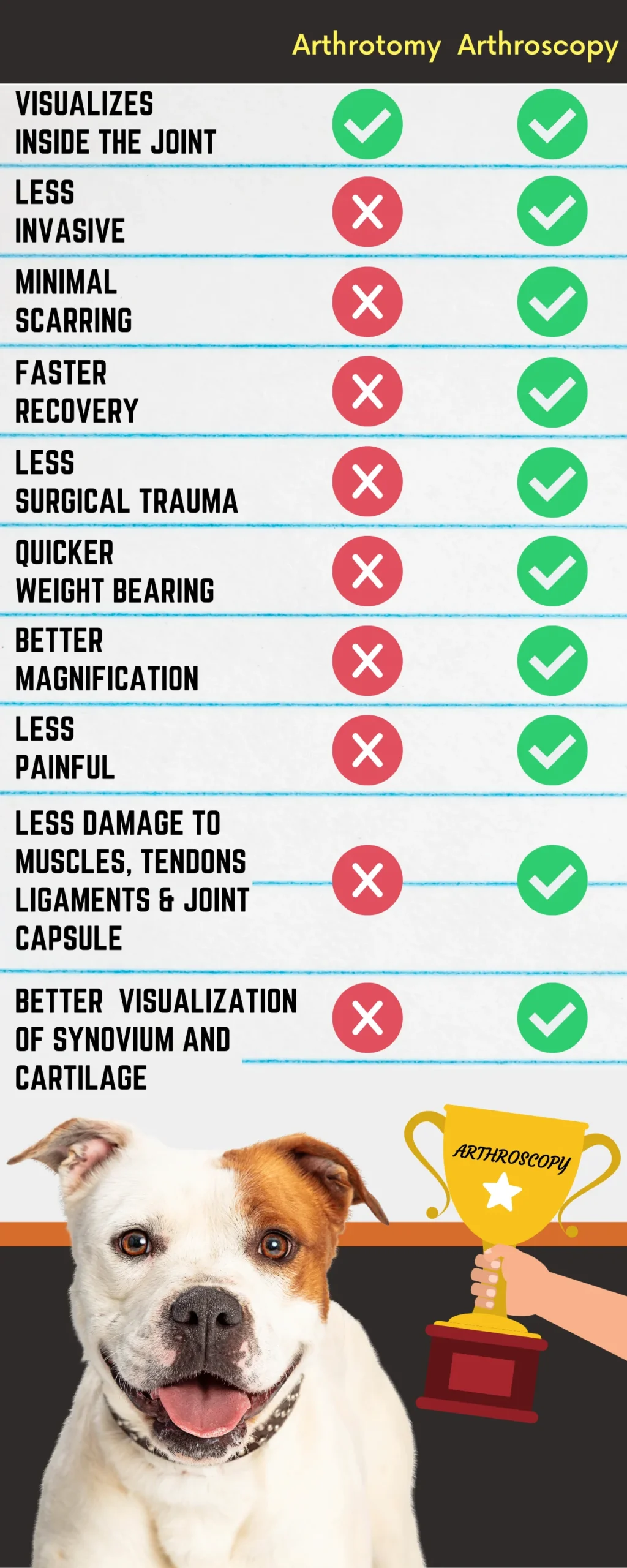
The standard of care in human medicine today, arthroscopy is a much less invasive way of examining and performing treatments in a joint.
Alternatively, arthrotomy involves cutting through muscle and the joint capsule to expose structures within the joint. Arthrotomy comes with a host of drawbacks.
Let's begin by addressing the shortcomings associated with the more invasive procedure. A fibrous capsule surrounds and encloses each joint. Arthrotomy involves using a scalpel or scissors to cut through the protective joint capsule to check bone health, cartilage, ligaments, and in the case of a canine knee, the meniscus cartilages. Arthrotomy takes longer to perform, causes increased soft tissue trauma, swelling and pain, and delays recovery compared to arthroscopy.
ACOSM surgeons prefer examining and treating joints using arthroscopy to minimize inflammation and damage to muscles, tendons, ligaments, and the joint capsule. Arthroscopy involves inserting a small scope and video camera combination through tiny incisions to illuminate and magnify structures within the joint, facilitating removal or treatment of frayed, loose, or torn tissues. We choose arthroscopy because it means more accurate diagnosis, more precise manipulations and treatments and a dramatically faster, less painful recovery for your pet.
This video is an example of our ability to visualize and examine by probe a partially torn, cranial cruciate ligament in a dog. The brightly illuminated, highly magnified and blood-free environment allows our surgeons to quickly identify torn ligament fibers.
Get Informed
Schedule a Consultation
Make no mistake, all surgical procedures are serious. Get the information you need and know your options. Then make an informed decision. Like any service, not all veterinary services are equal. Call to schedule or ask questions.