

Map

Canine Hip Dysplasia (CHD), the most common developmental orthopedic disease in dogs, is an abnormal development and growth of the hip joint. Both hips are usually affected but frequently only one hip may show symptoms. The onset of clinical signs may also not occur in both hips simultaneously.
“At risk” breeds (Labrador retrievers, Rottweilers, German Shepherds, Golden retrievers, etc.) for hip dysplasia.
CHD is characterized by varying degrees of laxity (looseness) of the muscles and ligaments around the hip joint with instability and malformation of the femoral head and acetabulum. Osteoarthritis is the long term consequence of hip joint instability and incongruency.
Young or Skeletally Immature Dogs
Juvenile pubic symphysiodesis may cause acetabular rotation that significantly improves femoral head coverage by induced and premature closure a dysplastic puppy’s pubic growth plate. JPS achieves these results by creating tension at the pubis and using the continued growth of the rest of the pelvis to achieve acetabular rotation over time. The growing cells of the pubic growth plate are destroyed during the surgical procedure. Since the rest of the pelvis continues to grow, the pubic bone acts as an anchor causing the pelvis and acetabulum to rotate outwardly and ventrally. Dysplastic puppies are reported to return to a normal gait and achieve diminished hip laxity following JPS.
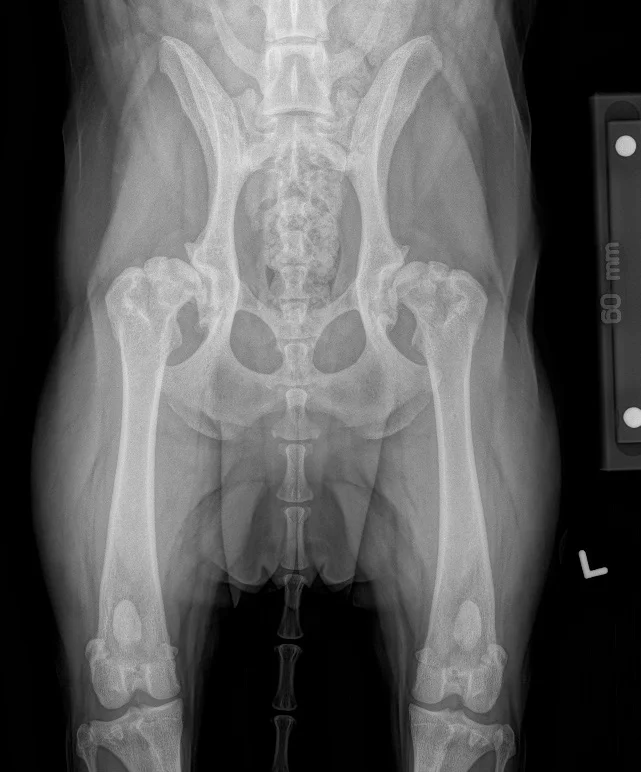
Below are PennHIP distraction radiographic hip images of a Spinone Italiano puppy at 16 weeks of age (top) and 6 months postoperative (right) JPS. Note the dramatic difference in hip joint laxity/distraction and congruency.
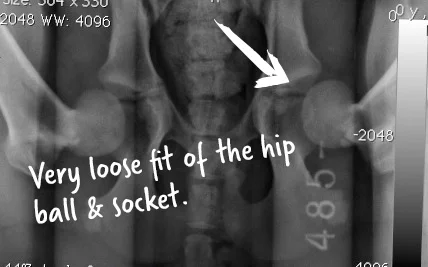
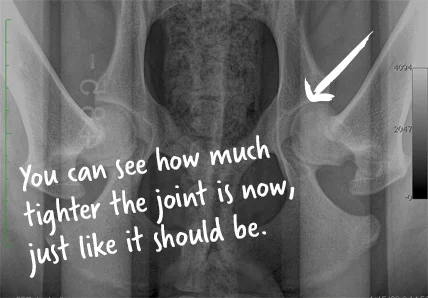
"Abby, our lab had HD and wants to run all of the time now. It’s such a night and day difference."
- Rob and Carrie T.
Anthem, AZ
Anthem, AZ
Get Informed
Schedule a Consultation
Make no mistake, all surgical procedures are serious. Get the information you need and know your options. Then make an informed decision. Like any service, not all veterinary services are equal. Call to schedule or ask questions.